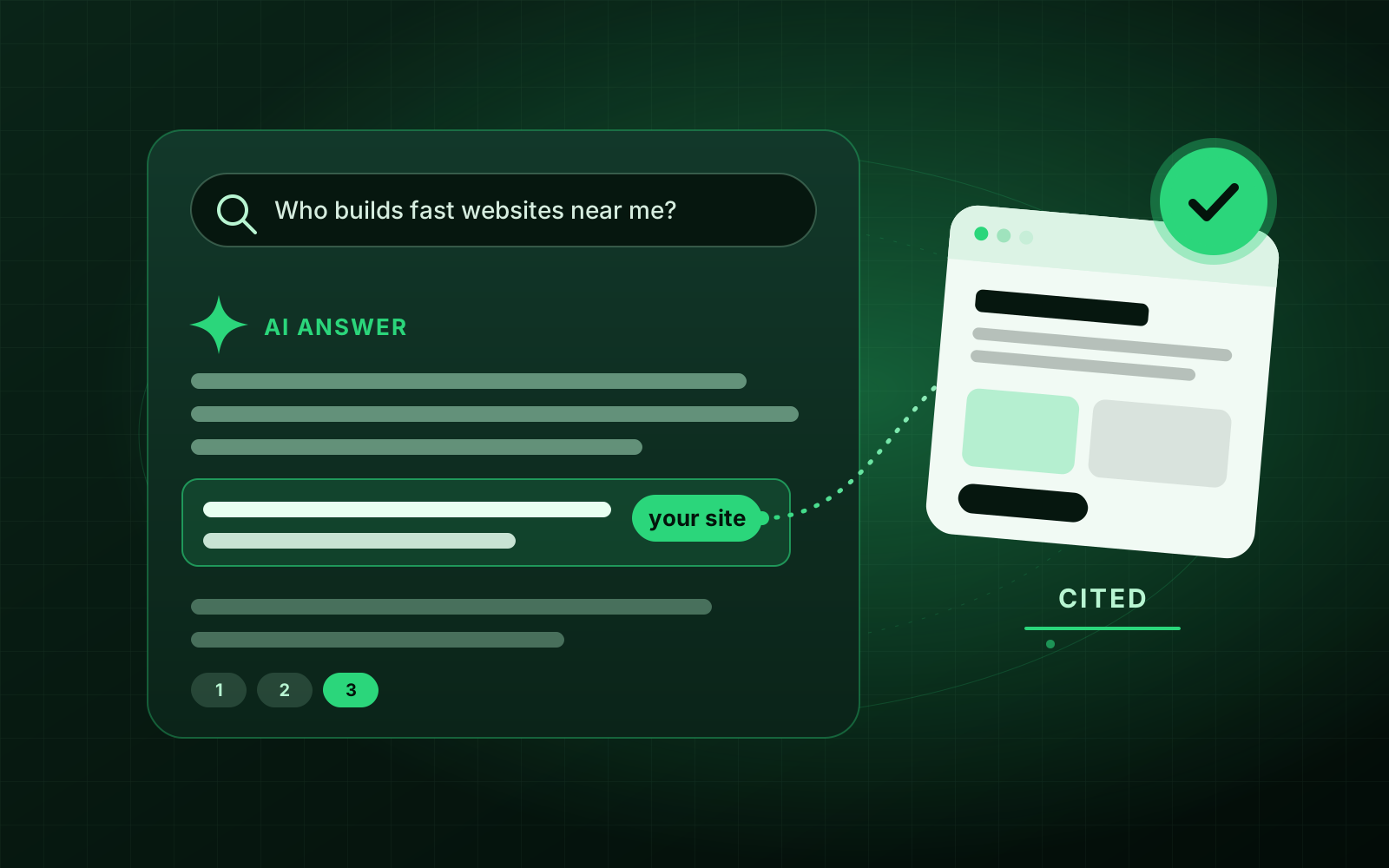
- Ranking is no longer the finish line. Being quoted inside the AI answer is.
- Pages with clear answers, real numbers and named sources get cited far more often.
- AI crawlers must be able to read your pages, so check robots.txt and render real HTML.
- Mentions on YouTube, Reddit, reviews and directories count as much as your own site.
The answer now comes before the link
Ask Google a real question today and there is a good chance you get a written answer before any website appears. Google says its AI Overviews reach more than 2.5 billion people a month, and the chat-style AI Mode has passed one billion monthly users. Hundreds of millions more ask ChatGPT, Gemini or Perplexity every week.
That changes what "being found" means. When Pew Research tracked real browsing, people clicked a normal result on only 8% of searches that showed an AI summary, against 15% when there was none. Links inside the summary itself were clicked about 1% of the time.
Fewer clicks is not the whole story, though. The visitors who do click through from an AI answer have already been told who you are and why you fit. They arrive warmer. The goal is to be the name inside that answer.
What the research says gets cited
The clearest study so far is the GEO paper from Princeton and partners, which tested nine ways of rewriting a page across 10,000 queries and measured how often the AI answer used it. Three changes stood out, each lifting visibility by roughly 30 to 40%:
- Add statistics. A specific number gives the model something concrete to repeat.
- Quote real sources. Named people and organisations make a claim easier to trust.
- Cite where facts come from. Links to the original data signal that the page did its homework.
What did not help much was the old habit of stuffing keywords. The models reward pages that read like a knowledgeable person explaining something, not pages written for a crawler.
AI engines do not cite the page that says the most. They cite the page that says it most clearly, with proof.
Build pages an AI can quote
Think of every important page as a set of answers someone might lift out whole. A few habits make that easy:
- Answer first. Put the direct answer in the first two sentences under each heading, then explain.
- Write headings as questions people actually ask: "How much does a Shopify store cost?" beats "Pricing".
- Use tables and lists for comparisons, prices, steps and specs. They are easy to extract.
- Show who wrote it and when it was last checked. Experience and freshness are trust signals.
- Keep one topic per page. A focused page is easier to match to a question than a page about everything.
Make sure the machines can read you
None of the writing matters if AI crawlers cannot fetch the page. This is where many sites quietly fail.
- Check robots.txt. Blocking OAI-SearchBot, PerplexityBot or Google's crawlers keeps you out of their answers.
- Ship real HTML. Content that only appears after JavaScript runs may never be seen. Server-rendered or static pages are safest.
- Add structured data. Organization, LocalBusiness, Article, Product and FAQ schema tell machines exactly what a page is.
- Stay fast. Slow, broken pages get crawled less and trusted less.
Be talked about beyond your own site
AI answers lean heavily on what other people say. In Pew's data the most cited sources in Google's summaries were Wikipedia, YouTube and Reddit. Models look for agreement across many places before they name a business.
- Keep your Google Business Profile complete and collect detailed reviews.
- Publish short explainer videos on YouTube that answer customer questions.
- Get listed on the directories and marketplaces your industry uses.
- Earn mentions in local press, partner sites and community threads by being genuinely useful.
Consistency matters. Your name, address, services and prices should read the same everywhere, or the model has no confident story to tell.
How to tell it is working
AI visibility is harder to track than a ranking, but it is not invisible.
- In GA4, watch referrals from chatgpt.com, perplexity.ai and gemini.google.com.
- Track branded searches in Search Console. People often ask AI, then search your name.
- Keep a list of 20 questions your buyers ask and check monthly who the AI names.
- Ask every new lead how they found you, and add "an AI assistant" as an option.
Start with your five most valuable pages. Rewrite them answer-first, add your real numbers and sources, fix the technical basics, and re-check those 20 questions a month later.
Questions people ask
Is GEO different from SEO?
It builds on SEO. Crawlable, fast, trustworthy pages still come first. GEO adds writing and structure that make a page easy for an AI to quote.
Can a small business get cited by ChatGPT?
Yes. AI answers often favour a specific, well-explained local or niche page over a big generic one, especially for questions with a location or a clear need.
How long does it take to show results?
Search-based AI answers can pick up changes within weeks of a page being re-crawled. Brand mentions across the web build up over a few months.

 AIThe Build Brief
 GUIDEThe Build Brief
 MARKETING